What an electrical inspection actually finds in an older Tarrant County house
The point of an inspection is to replace guesswork with a list, in an order that reflects risk rather than invoice size.
September 8, 2026 · 3 min read
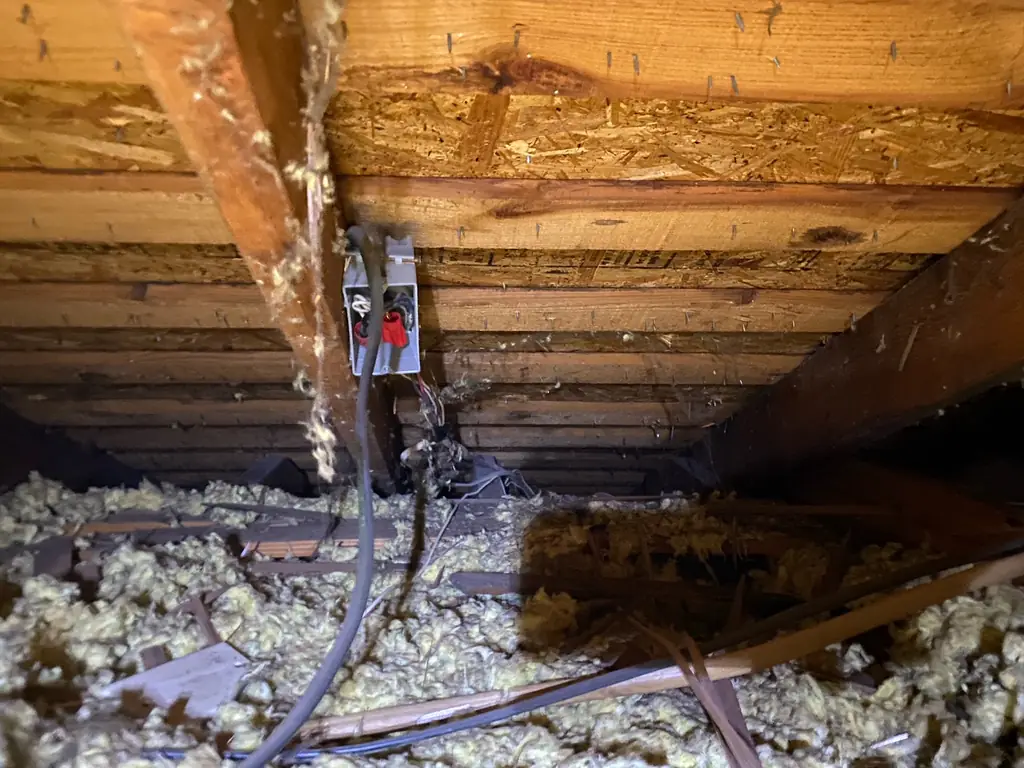
An electrical inspection and an electrical repair are two different services that work hand in hand. We use an inspection to find and name the specific problems, then set out the repair options so you can decide what gets done and in what order. The inspection is not a quote wearing a disguise.
That distinction matters, because the most useful thing an inspection produces is not a price. It is a list you can act on over time, sorted by how much each item actually matters.
It starts at the panel, and it takes a while there
The dead front comes off and most of the story is visible immediately. Conductor condition. How the neutrals and grounds are landed, and whether they are sharing terminals that should carry one wire each. Whether any breaker has two conductors under a lug that was designed for one. Signs of heat at the bus, which is the finding that changes everything else.
The panel also answers the questions that make everything else cheaper or more expensive. Whether there is room to add circuits. Whether the service is sized for the house as it is used today. Whether the grounding electrode system is intact, which is the part nobody sees and everything else depends on.
What commonly turns up in houses of this era
Northeast Tarrant County housing was built in identifiable waves, and each wave leaves a recognisable set of findings. After a few decades of opening panels in the same postcodes you can usually predict most of them before the cover is off.
- Three prong receptacles on two wire circuits, with no equipment ground behind them
- Missing ground fault protection in kitchens, bathrooms, garages, laundries and outdoors
- No arc fault protection anywhere, because the requirement postdates the house
- Aluminum branch circuit wiring from the late sixties and seventies, with terminations that have loosened over decades of heating and cooling
- Junction boxes buried in attic insulation or covered over during a past renovation, where the code requires them to stay accessible
- Ceiling fans hung from boxes never rated to carry a moving load
- Smoke alarms well past their service life, which is roughly ten years from the date on the back rather than from the last battery change
Most of these are not emergencies. Several of them are worth doing the next time an electrician is in the house for something else, which is exactly the kind of sequencing a written list makes possible.
Sorting the findings by risk rather than by price
The order we recommend is fairly consistent. First, anything showing heat, because arcing and overheating are fire risks and they get worse rather than stable. Second, shock protection in the wet locations, because those are where people and water and electricity meet. Third, detection, meaning smoke and carbon monoxide alarms that are in date, hardwired and interconnected.
After that comes capacity, meaning the panel and service work that lets you do everything else. Then the improvements that are genuinely improvements rather than corrections, such as added circuits, better lighting, or a car charger.
What you should get at the end
A useful inspection leaves you with findings written down in plain words, an indication of urgency against each, and options where options exist. Where there is more than one legitimate fix at very different prices, all of them should be on the page.
It should also tell you what is fine. A list containing only problems is not a survey, it is a sales document. Plenty of what we look at in older houses is in good condition and wants nothing except to be left alone, and saying so is part of the job.
When it is worth doing
The obvious moments are before or just after buying an older house, before a renovation that will make parts of the system harder to reach, and before taking on a commercial building whose electrical history you have inherited rather than chosen.
The less obvious one is when something intermittent is happening that nobody can reproduce. Lights that dim oddly, a circuit that trips only occasionally, electronics that behave strangely in one room. Those are the symptoms that a systematic look finds and a call out for a single fault usually does not.
One customer told us that because we took the extra time to talk to an inspector first, we saved him from a considerably more expensive repair than the first two contractors had quoted. That is the version of this service worth paying for.
Peerless Electric · (817) 373-5720
Call (817) 373-5720More articles
What a tripping breaker is actually telling you
There are three different faults behind almost every tripping breaker, and they do not carry the same urgency.
Federal Pacific and Zinsco panels: what to do if your house still has one
The problem with these panels is not that they are old. It is that the breaker may not open when a circuit faults.