05
Outlets, protection devices and ceiling fans
The small jobs, done to the same standard as the large ones. Arc fault and ground fault protection where the code calls for it, receptacles that are actually grounded, and fans hung off something rated to hold them.
Chapter 01
What AFCI and GFCI actually protect against
They are two different devices for two different dangers, and they get confused constantly. A ground fault device watches for current leaving the circuit through an unintended path, which is the shock hazard, and it is why they belong in kitchens, bathrooms, garages, laundries and outdoors.
An arc fault device is looking for the signature of arcing, which is the fire hazard. A damaged cord, a nail through a cable during a picture hanging, or a loose terminal can arc for a long time without ever drawing enough current to trip a conventional breaker. That is precisely the gap arc fault protection exists to close.
Which one you need, and whether it belongs at the breaker or at the first receptacle on the circuit, depends on the circuit. We work that out rather than fitting one of each and calling it covered.
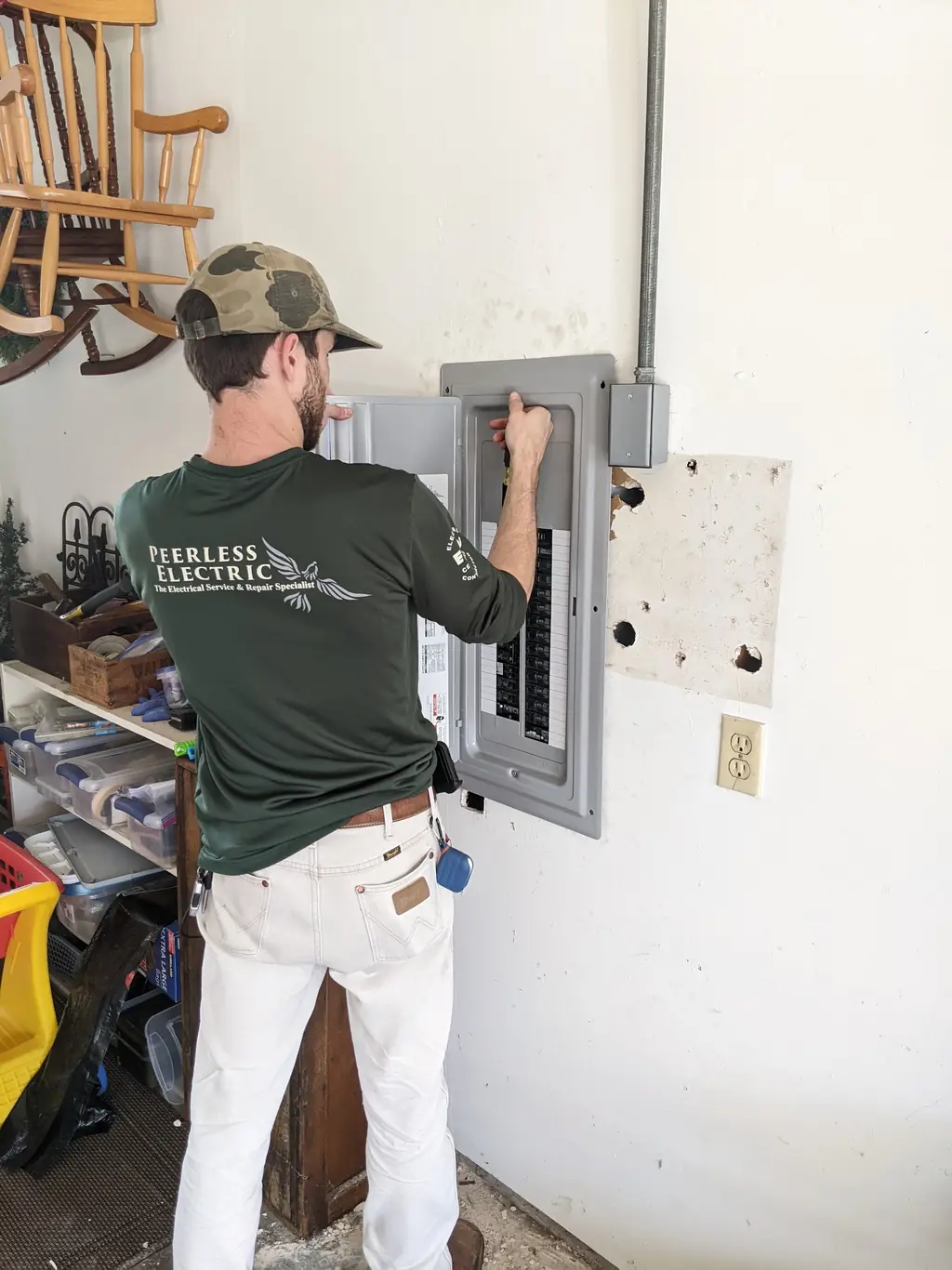
Peerless Electric technician in a branded long sleeve shirt working a garage service panel
The ungrounded three prong outlet problem
In a lot of older tri-cities houses the receptacles have three slots and no ground behind them, usually because someone swapped a two prong outlet for a three prong one at some point. Anything plugged in that expects a ground path is not getting one, and no surge protection strip on that outlet can work as intended.
There are three honest fixes and they cost very different amounts: run a ground to the circuit, protect the circuit with a ground fault device and label the outlets accordingly as the code permits, or rewire the circuit. We will show you which of those applies to your particular circuit rather than defaulting to the most expensive.
Chapter 03
Adding a receptacle where you actually need one
Adding an outlet is rarely about the outlet. It is about which circuit has capacity to take it, whether the route can be made without opening drywall, and whether the thing you intend to plug in wants a dedicated circuit rather than a share of one.
A garage freezer, a workshop tool, a window unit or a space heater are all cases where the right answer is usually a dedicated circuit. Adding a receptacle to an already loaded kitchen circuit just relocates the nuisance trip.
Ceiling fans, and why the box is the whole job
A ceiling fan puts a live vibrating load on the ceiling for years. A standard device box is not rated for that, and neither is a light fixture box that happens to be there already. The fan goes on a fan rated box braced to structure, every time.
Where a fan is replacing a light in a room that never had one, we check the switch legs before quoting, because separate fan and light control usually needs a conductor that is not in the wall yet. Better to find that out before the old fixture comes down.
One customer has had us back several times for ceiling lamps and for ground fault outlets that were malfunctioning. Free estimates on most work.