Planning a home EV charger before you buy the car
A home charger is a large continuous load on a service that was probably never sized with one in mind.
September 8, 2026 · 4 min read
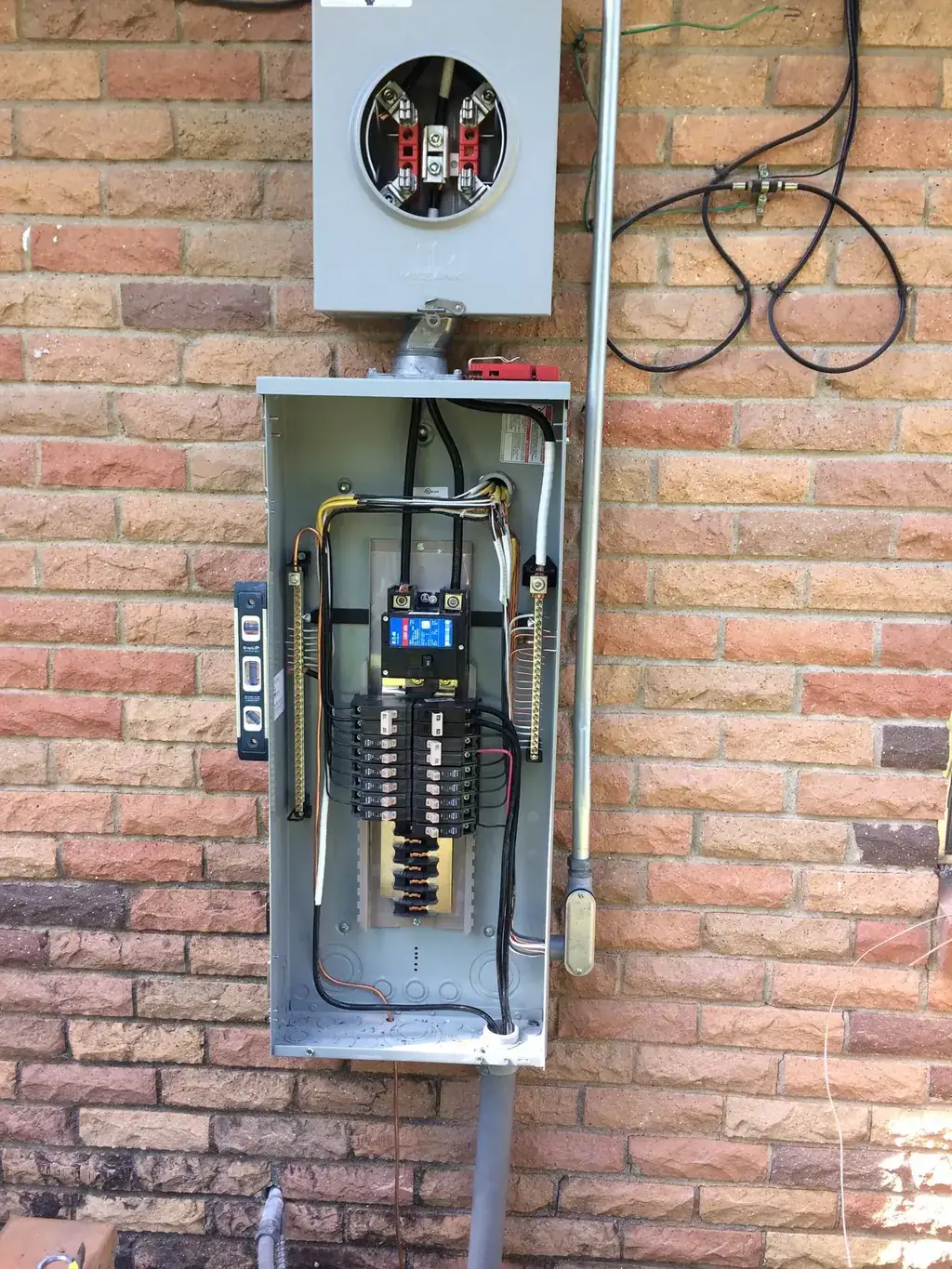
The best time to find out whether your house can take a car charger is before there is a car in the driveway waiting for one. The physical installation is not complicated. The part that determines both feasibility and price happens before anyone picks up a tool.
Why a charger is treated differently from other appliances
A Level 2 charger is a continuous load, meaning it draws near its maximum for hours at a stretch rather than cycling like a dryer or an oven. The code requires continuous loads to be sized above their actual draw, so a charger set to forty amps needs a circuit rated for more than forty.
That single rule is why a charger can be the thing that finally exceeds a service which has coped with everything else. Your air conditioning cycles. Your range is used in bursts. A car charging overnight is a steady, hours long draw and it stacks on top of whatever else the house does at that hour.
The load calculation is the whole first visit
Before anything is quoted, the house gets a load calculation against what it actually runs: square footage, fixed appliances, heating and cooling, and anything you already know is coming. That produces a real number to compare against the service size, rather than a guess based on the panel's label.
There are three outcomes. The service carries it comfortably and the job is a circuit. The service is marginal, in which case a load management device can let the charger share capacity intelligently with the rest of the house and back off when the air conditioning starts. Or the service genuinely will not carry it and you are looking at a service change.
That third outcome is the expensive one and it is the reason to ask early. It is far better to know before you have committed to a vehicle and a charger than to find out afterwards.
Where the charger goes decides most of the price
The single biggest variable in the cost of a charger install is the distance and the route from the panel to the parking spot. A panel on the garage wall is a very short run. A panel on the far side of the house, or a detached garage across a driveway, is a materially different job.
So the route gets walked before anything is quoted. Whether it can go through attic or crawl space rather than across a finished ceiling. Whether any of it is exterior and therefore needs conduit and fittings rated for wet locations. Whether a driveway has to be crossed, which changes the job again.
One detail that sounds trivial and is not: which side of the car the charge port is on. A charger mounted on the wrong wall of a two car garage means a cable stretched across the second bay every night for the life of the vehicle.
Hardwired or plug in
Both are legitimate and the right answer depends on your situation. A hardwired unit is generally better outdoors and for higher amperage installations, and it removes the receptacle as a point of failure on a connection that will be under sustained load.
A plug in unit on a suitable receptacle is easier to swap if the charger fails or the technology moves on, and it can come with you if you move. If you are renting, or expect to move within a few years, that flexibility is worth something real.
- Either way the circuit is dedicated, not shared with the garage lights or a freezer
- Either way it is protected as the code requires for the location it is installed in
- Either way the work is permitted and inspected, which matters to an insurer and to a future buyer
Questions worth asking any electrician quoting this
Ask whether they have done a load calculation or estimated from the panel size. Ask what the quote assumes about the route, and what changes it if the route turns out differently. Ask whether the price includes the permit and the inspection.
Ask, too, what happens if the service turns out to be too small. A good answer describes both the load management option and the service change option with honest prices for each. A poor answer defaults straight to the biggest job.
We work Eaton, Siemens and Cutler Hammer equipment as a matter of routine, so the breaker landing in your panel is matched to the panel rather than approximated. And if the honest answer is that your service will not take a forty amp charger but will comfortably take a smaller one that still fills the car overnight, that is the answer you will get.
Peerless Electric · (817) 373-5720
Call (817) 373-5720More articles
What a tripping breaker is actually telling you
There are three different faults behind almost every tripping breaker, and they do not carry the same urgency.
Federal Pacific and Zinsco panels: what to do if your house still has one
The problem with these panels is not that they are old. It is that the breaker may not open when a circuit faults.